
Five ways we support your child
Most families start with an evaluation. From there we will make recommendations for therapy, and the right supports for your child.
Effective communication is one of life's most important tools
Speech and language skills begin to develop in infancy and continue throughout a child's school years as they explore, play, interact, and imitate what they say and hear.
Children with difficulty in speech and language may be hard to understand, use few words to communicate and interact, and may struggle to follow directions. Communication breakdowns can also lead to frustration and behaviors. If you have concerns about your child's development, an evaluation is the first step in determining whether therapy is right for them.
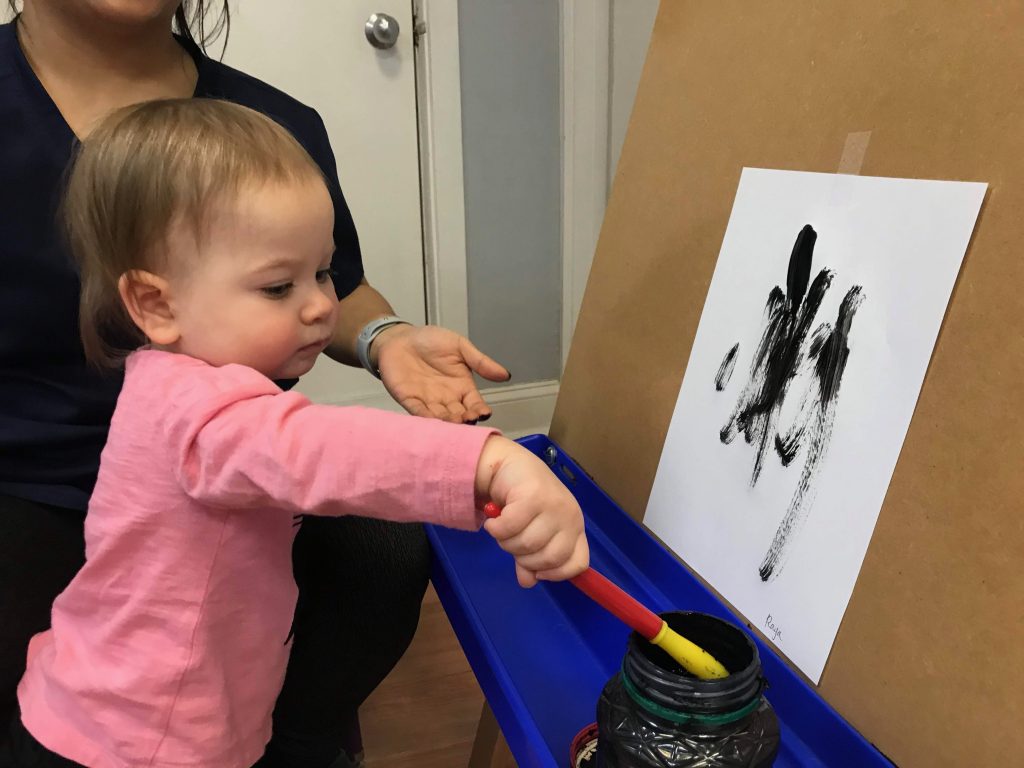
Areas targeted in speech therapy may include
Individual speech and/or language therapy may be recommended upon completion of an evaluation. Session duration is determined by need, the endurance of the child, and the skills being targeted — and each session targets specific goals drawn from the evaluation and clinical observation.
Where your child is now, in plain language
Evaluations determine a child's baseline skills across speech, language, and play. Information is gathered through several measures: clinical observations, play-based assessments, standardized measures, and parental report.
On completion, you receive a comprehensive report outlining objective results, observations, and recommendations for treatment. If therapy is warranted, treatment goals are provided and updated on an ongoing basis. A parent meeting is scheduled to talk through the report in detail and answer every question.
Skills assessed

In-school consultations
The ultimate goal of therapy is to support and develop the communication skills that set children up for academic and social success. Children are often best able to exhibit their skills in the environment therapy provides — individualized attention with minimal external distraction.
Generalizing those skills into the classroom can be a challenge: filtering distractions, the time sensitivity of participating in a larger group, and increased independence. School consultations support that generalization directly.
Progress without leaving home
Teletherapy is a way to progress your child's skill set from home. Most activities conducted over video chat are similar to a typical in-person session.
Parent participation may be a key component in supporting engagement and participation during these sessions.


Occupational therapy
Caroline Baird, MOT, OTR/L has joined the practice and brings almost ten years of occupational therapy experience treating the whole child. Occupational therapy helps children develop the skills needed to participate in daily activities and routines. OT addresses fine and gross motor skills, sensory processing, self-care skills (such as dressing, feeding, and toileting), body awareness, and coordination.

Tell us what you're seeing at home or hearing from school. We'll help you figure out which of these your child actually needs.